We are very pleased to announce the official launch of TZ Professional v3, the biggest TIMEZERO release ever!
Since its release back in 2007, our range of TIMEZERO products has not stopped evolving, always maintaining the same objective: to provide a product that meets the most demanding needs of professionals at sea. Close to 25,000 vessels currently use our TIMEZERO software. This new version offers an incredible amount of new features specifically designed for both professional fishermen and workboats.
The primary new features designed for professional fishermen are the following:
New PBG module offering a resolution level twice as powerful
New profile window allowing for instant visualization of seafloor detail
New Fishing Workspace allowing for customized shading and contour lines
New redesigned 3D Workspace (“3D Cube”)
The primary new features designed specifically for workboats are the following:
Compatible with S57 NOAA Charts and official S63 ENC Charts
New advanced route management (checks depth and obstacles inside the XTE of the planned route)
New AIS features (receiving and sending “normal” and “safety” AIS messages from within the software)
Access the complete list of new features and enhancements (PDF):
If you have any questions, then please don’t hesitate to get into contact.
Because if you’re out at sea and the sun’s glare is beating down on you, those UV rays are going to reflecting off the surface right into your eyes no matter which direction they’re in. So make sure you get some polarized UV protected sun glasses to keep your eyes nice and safe. Again it is worth buying a pair that will last the test of time.
Life jacket
It probably goes without saying. Don’t go out at sea without a lifejacket. Pick one up new or second hand. Make sure the quality is good and that it will serve its purpose of saving your life.
Wet Weather set up
No matter where you are in the world and no matter what the forecast says, you need to be prepared for things to change quickly. If you don’t have wet weather gear you can land yourself in trouble quickly!
Fishing Gear
No matter whether you are going offshore or inshore and even if you don’t know what you’re doing, make sure to bring some fishing equipment.
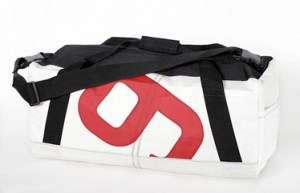
Duffel bag
The duffel bag is a sailor’s best friend because of its ability to fit snuggly into any crevice or cranny so that it doesn’t have to be in the way elsewhere.
Music Player
For when the sun is out and the drinks are on the table and you can put on your favourite track playlist. Make sure you test out the compatibility with your boat before leaving!
Book
There is no better place to lose yourself in a book than out at sea, so make sure you bring that book you got given at Christmas that you keep meaning to start any day now.
Handheld Navigation
Everyone loves the usability of an iPad and that you can use it anywhere, especially on a boat where using a mouse becomes tricky. The TZ App is a great App that is free and available for iPad. The great advantage with this App is that it allows you to buy Wide 3D raster charts at only 50€ which would cost a lot more on paper and this way you get all the information inside an easy to use device without having to faff around with papers all day.
The key to having a great trip out at sea is planning your route in advance so you know exactly where you’re going, how the weather will be, how long it will take and other important information such as high tide and currents to watch out for. TIMEZERO software is the most powerful software available on the market today, it allows you to connect up all your hardware components (GPS, radar and sounder) with charts to a standard everyday PC and plan and monitor your trip within a single program. All you need to do is bring your laptop along.
The box jellyfish has the most deadly Sting arguably of any species. One sting can have you dead within two minutes if you don’t have an antidote close by then you’re in serious trouble! Even then the antidote takes longer than 2 minutes to start working, so if you’re getting stung by a large box jelly fish that has tentacles of over 2 metres, then there is very little that can be done.
The box jellyfish is another beast from its relatives. Most jellyfish do not even have a brain and therefore do not really hunt but just go with the wind, or in this case the waves and currents. Box jellyfish are deadly predators with 360 degree vision, can swim up to 20 mph and have brains. All that mixed with the fact that they consist of 96% water.
We all know that Australians are crazy but Professor Jamie Seymour takes a bold step above his fellow people, as he goes out wrestling box jellyfish in the name of science in the video below. He is of course not just doing out of fun but in the name of science, although he does seem to get his thrills from catching them and keeping them in his laboratory.
More than being just a video about how dangerous the species is, he explains why the sting is deadly and why it is important to work on developing a faster acting antidote to help prevent more deaths.
If we have learnt one thing from this video is that the world needs to see more of this type of content.
We all know the expression, being surrounded by sea water and not being able to drink a drop of it. One of the factors that across the years has been perilous to some of the most experienced sailors in the world. In any case, science has come up with an answer to this problem and created a bottle that can make its own water using nothing but the air around it and a bit of sunlight.
So you can forget about lugging around liters of water for your next trip, just bring a couple empty Fontus bottles with you! Ok, perhaps that isn’t quite the reality of it yet but with the right conditions they have proven that one of their water bottles can “harvest” up to 0,8 litres of water in just one hour!
Their epic moment music choice is definitely warranted and it’s surprising that this isn’t a bigger deal. It seems they are planning to launch a funding campaign in the near future.
The way the product works is that it takes in the surrounding humid air and uses the energy created by the solar panels to cool that humid air to the point that it becomes liquid and drops down into the flask container and hey presto, water from thin air!
We are proud to be an official partner for French round the world sailing project www.sailingforchange.com. Their goal is to sail the world, produce zero waste and also carry out scientific research. They consist of four young and self-proclaimed dynamic personalities who want to use sailing the world as a way to promote a different way for everyone to live on land by recycling and participating in an economy which makes sense.
Their goal is to use the idea that even sailing around the world can be done waste free, to promote and highlight every aspect of waste that we may not take into account on a day to day basis and educate their viewers about how they can put into place the same practices at home.
They will be releasing a web series which will each stick to a different theme that all audiences can understand and associate with. For example, highlighting the heavy topic of our current linear economy of mining, producing, consuming and throwing away and talking about an alternative lifestyle in the circular economy based on renewable energies and products that are not toxic.
It is certainly a worthy project, especially if it can inspire others to adopt the same policies whether they’re sailing or at home on land.
They are set to leave Brittany, France in October of this year.
There is a current trend taking place among cargo ships to reduce their carbon emissions. For the most part it is economically viable go look at green shipping practices which can be defined as anything that reduces the carbon footprint of shipping. The reason that it is so important to look to reduce the emissions of these carbon footprints is primarily because 50% of costs for these vessels comes from the fuel itself. So simply by reducing fuel costs, shipping companies make more money.
Transporting cargo by boat remains the most efficient and carbon friendly means of transport but there are still billions of tons of CO2 being released into the atmosphere each year as a result of the ship transport industry. Ships transporting cargo equals 2.6 percent of total carbon emissions worldwide and that number is certainly going to increase at a rapid rate as is reported in this European Parliament report which estimates shipping accounting for 1/6 of total carbon emissions by 2050.
L.N.G Powered Ships
This method uses liquefied natural gas which can be chilled to minus 260 degrees Farenheit. This releases up to 20% less carbon emissions than the standard tar like fuel.
“We came to a decision that rather than putting Band-Aids on things, we should look for ways to address core issues of maritime emissions,” Peter Keller, executive vice president of Tote, who built two ships that can use this technology after shelling out $350m. This method is not necessarily cheaper but provides a better marketing angle for companies who want to reduce their carbon footprint during transportation of goods.
Several companies such as Silverstream have created a bubble technology to produce a carpet of bubbles along the bottom of a ship. As the hull is mostly encountering air instead of water, the friction encountered is reduced and so the ship can go faster. Tests on a Shell 575 foot long tanker showed nearly 5% change in fuel efficiency and with further improvement they feel that they could even get close to 10%. While this technology is in it’s infancy, with time it could become adopted on a mainstream level.
Slow Steaming
Slow steaming has had a significant impact on liner ships since the economic crisis back in 2008. Simply by reducing the speed, by several nautical miles per hour, fuel consumption is reduced significantly and less CO2 is emitted overall.
Over improvements can be small but effective such as polishing propellers or coating the hull with paint that inhibits algae growth. In any case, it would seem that real technological advancement will need to take place in these larger ships before it can be passed down to the leisure boat industry.
With 70,000 cargo ships on the high seas there is a lot of potential for decreasing carbon emissions and saving money, so technological advances seems like a no brainer. Perhaps it won’t be too long before your boat will be fitted with air bubble friction reduction technology.
Watch this video below about improving shipping fuel effeciency:
It is hard to imagine that this small island in the Adriatic Sea could have been used as a concentration camp where over 2,300 people were imprisoned during World War 2 under the orders of Mussolini.
Final testing of the Ocean Cleanup is set to take place in the North Sea. You may have heard or watched the Ted talks in which Boyan Slat as a 17 year old talks ambitiously about how he is going to get rid of the plastic in the oceans. Well not only was it a great idea but with the idea now 4 years down the line, he is close to making it a reality. If the project really is feasible and it really could clean up the floating plastics, starting with those in the great pacific garbage patch, it would be huge.
Spindrift 2 have failed to beat the Jules Verne around the world record falling agonizingly short. A message posted on their Facebook page let their fans know that at the final furlong, the weather had not been kind. Banque Populaire V’s record was off the books. Within the brief message they showed the spirit that exists within the close knit team and talked about the adventure in itself being their ultimate goal but still, they must be bitterly disappointed to have got so close.
Spin Drift is the latest Jules Verne challenger. Equipped with a revamped Banque Populaire racing machine that set the world record with Loïck Peyron back in 2012, they set out to beat that challenge. This time they have had it rebuilt to be harder, faster and stronger than ever before.


 It probably goes without saying. Don’t go out at sea without a lifejacket. Pick one up new or second hand. Make sure the quality is good and that it will serve its purpose of saving your life.